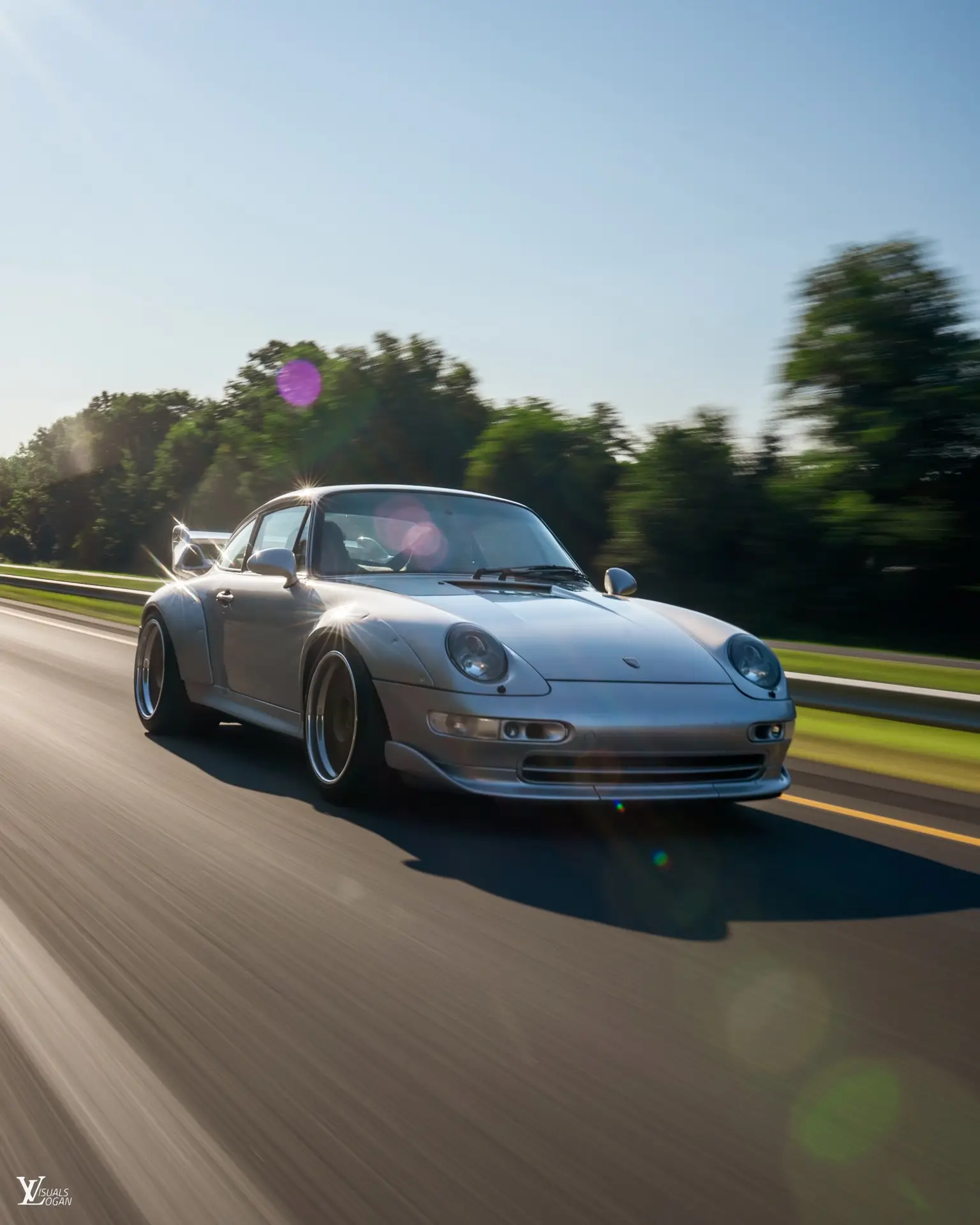
When you’re eight years old and see something that quick, that deadly, and that beautiful, it changes the way your brain works forever. Some kids who were born in 1980 got a baseball card, a fighter jet, or the Space Shuttle. For me, it was a Porsche.
I don’t know exactly when it happened. It may have been a sign on the wall of my brother’s bedroom. It could have been a flicker of a whale tail going around a corner in a movie I wasn’t old enough to see. But by the time I could read car magazines and not simply gaze at the photographs, Porsche had already made a permanent mark on my psyche. The brand had a story that was different from any other automotive brand. People talked about 911s way sailors talked about the sea: with terror, reverence, and the quiet knowledge that if you didn’t respect what you were dealing with, it would teach you lessons you would never forget.
There was a lot of folklore. The tails of Porsche 911s liked to swing. If you merely breathed wrong on the throttle, they would switch ends in the middle of a turn. The engine hung behind the back axle like a pendulum. If that pendulum started to swing, you were in huge trouble. The older guys at the car meets would tell these anecdotes with a smile on their faces. They were about snap oversteer, lift-off oversteer, and friends of friends who had crashed into a guardrail or a ditch because they were too sure of themselves in a rear-engine automobile that didn’t care about making mistakes. These were not warnings. They were telling folks to come. That’s what I heard them say.
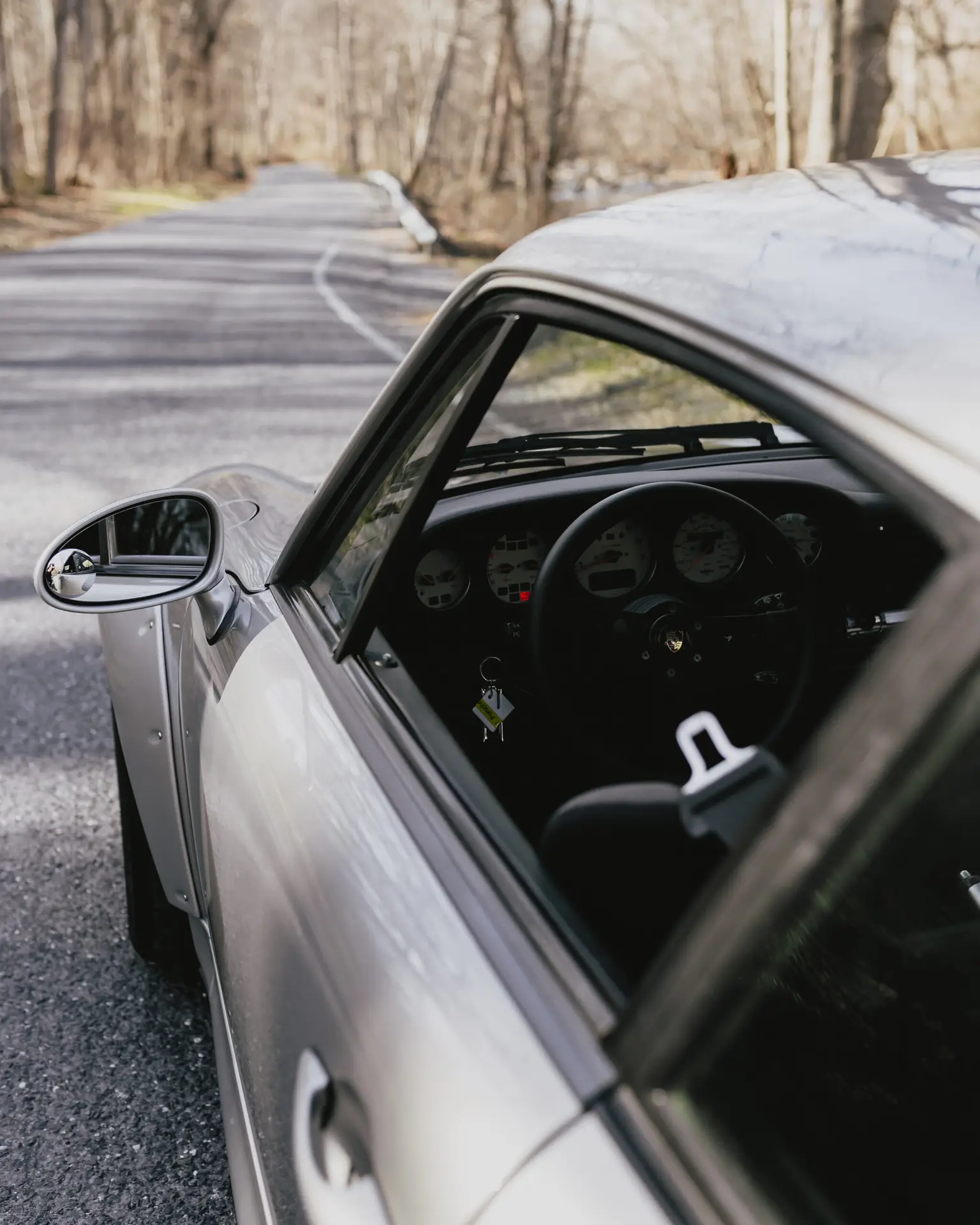
And then I learned about the GT2.
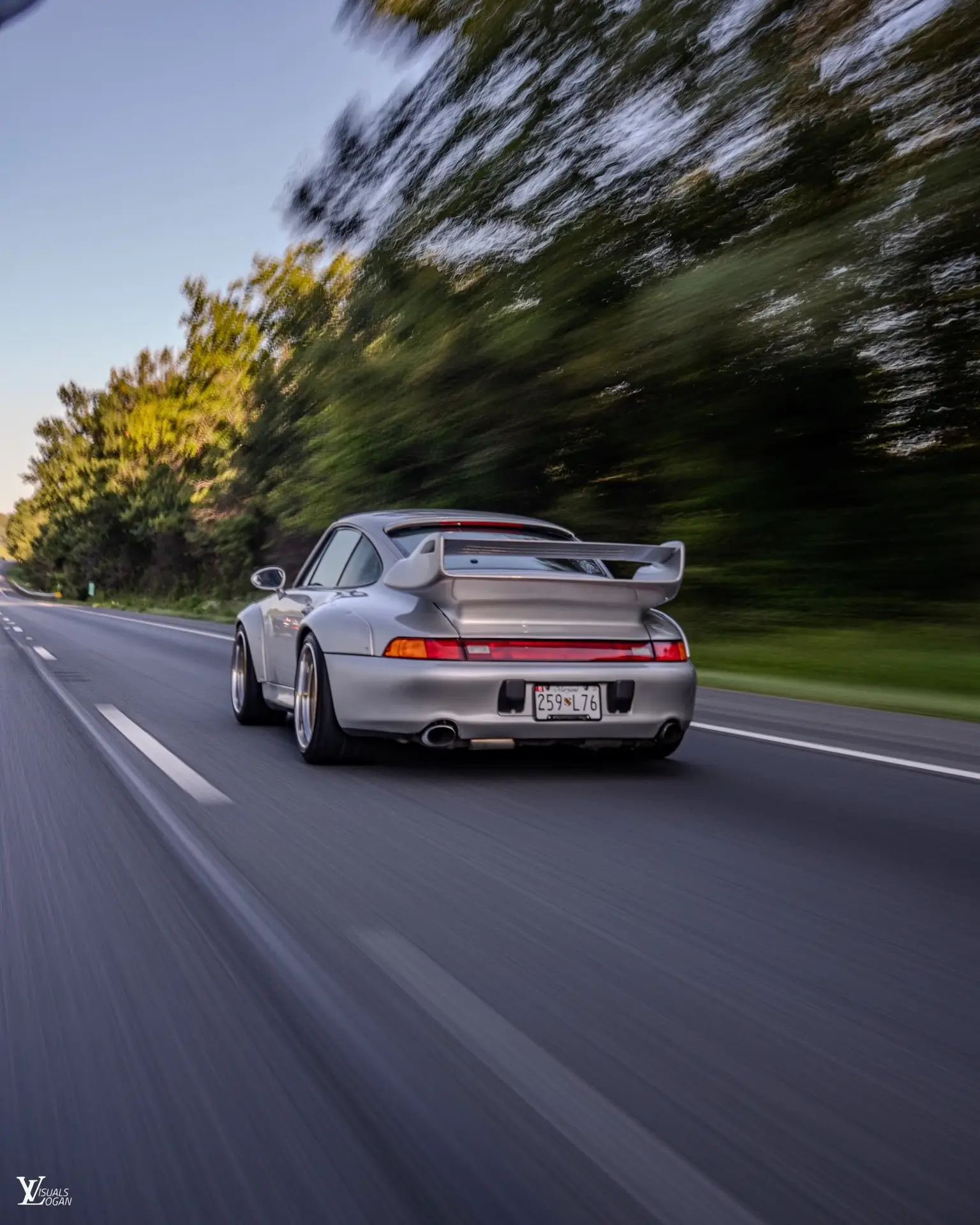
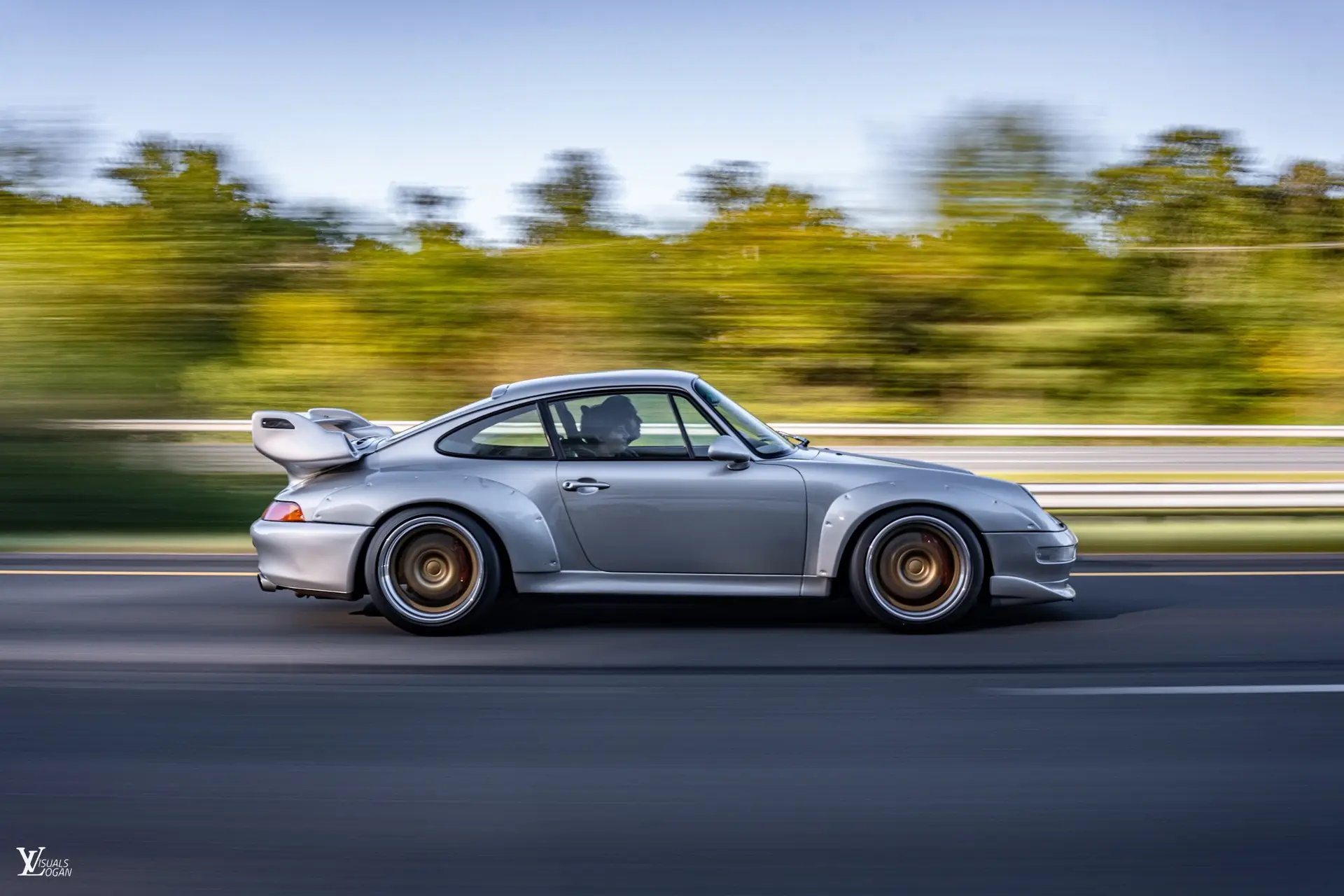
The normal 911 Turbo was the dark horse of the Porsche stable, but the 993 GT2 was the wild horse that bucked riders and bit handlers and didn’t care who was watching. Porsche was able to race in the BPR Global GT Series, but the rules said they had to produce a road version of the car. And they did. They took the already terrifying twin-turbocharged flat-six, which generated 424 horsepower from its 3.6 liters, and took off the all-wheel-drive technology that made the normal Turbo a little easier to drive. After that, they delivered all of the power to the back wheels. They made the fenders broader by adding bolt-on flares, put on a big back wing with working air scoops in the struts, took out soundproofing and comfort features, and basically told customers who wanted to buy the car, “Good luck.”
The car was light at 2,855 pounds and could go from 0 to 60 mph in under 3.7 seconds. These results would be astounding even now, let alone in 1995. Porsche only manufactured 194 of them over the total production run. There were 57 automobiles on the road. The other ones were considerably crazy, including the Club Sport and racing versions. The GT2 won seven of eleven BPR rounds in its first full season in 1996 and its class at the 24 Hours of Le Mans in both 1996 and 1997. On the track, it was a weapon. It was a challenge on the street.
It had the name Widowmaker.
That name didn’t intimidate me. It put me in a trance. At that point, I was a teen. I would cut out magazine pages and tape them on the wall of my room. I would remember specs like other kids remembered how many times they hit. The GT2 was something that seemed to be getting less and rarer in the world: a machine that was constructed without any safety nets, apologies, or compromises made by a group. It was tidy. It was honest. And that was incredibly dangerous.
Twenty years later, the dream had teeth. I had a successful business. I had a few cool automobiles that I liked. But the GT2 never went away. It was like a melody that wouldn’t leave my head. Of course, the difficulty was that the tale had gotten out to the market. In the middle of the 2020s, authentic 993 GT2s were going for over a million dollars. In 2024, a 1996 model sold for more over two million dollars at RM Sotheby’s. Let that settle in for a minute. It costs two million dollars to make a Porsche car that was created for racing and has to be made street-legal. The market for air-cooled cars had gone straight up, and the GT2 was at the top.
I don’t drive cars that are worth two million dollars. I don’t mean that as false modesty; I mean it as a philosophical statement. That kind of car is stuck because of how much it’s worth. You can’t drive it while it’s wet. You can’t leave it at the store. You can’t push it through a canyon road the way it was supposed to be pushed since every rock chip, curb scrape, and tenth of a mile on the odometer costs you money, which makes it not pleasant at all. I didn’t want anything that should be in a museum. I wanted to feel the widebody posture, the turbocharged scream, and the mechanical purity of an air-cooled flat-six attempting to get away from its engine mounts. I wanted to know what that car felt like without having to take out a second mortgage or be on medication for anxiety.
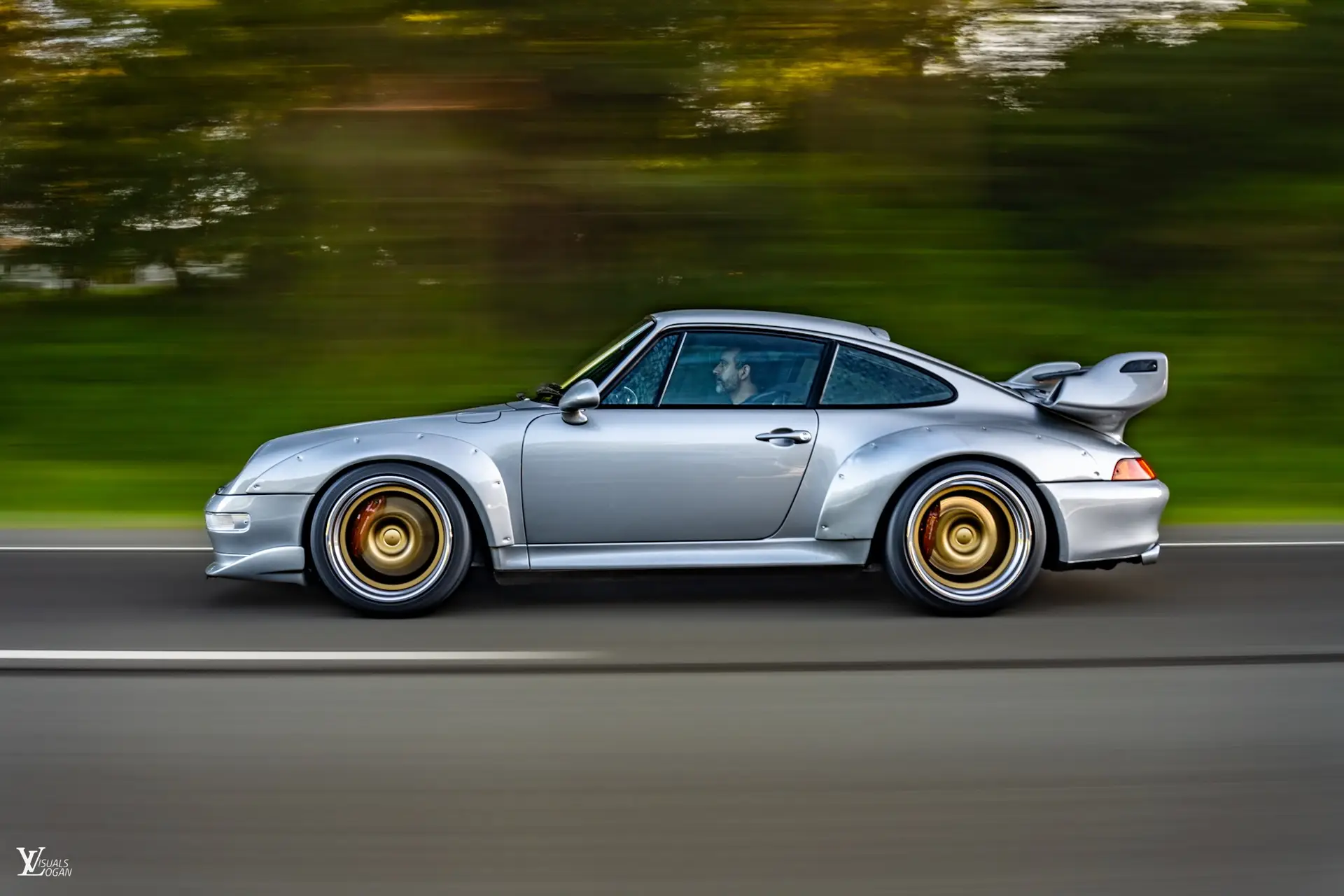
At that time, I found Mark Kinninger on Pelican Parts Forums. Mark owns Kinninger Racing in San Diego, California. If you spend any time in the air-cooled Porsche scene, people talk about him with the same kind of regard that old-school watchmakers or master luthiers get. For more than thirty years, he has worked on these cars. For many of those years, he worked with the crew at Black Forest Automotive, which is one of the greatest independent Porsche shops on the West Coast. Five of his cars have been featured in Excellence publication, one of the greatest publication for news about Porsches. He doesn’t only fix Porsches. He knows them inside and out.
Mark’s GT2 Klone, which he spells with a K as a modest but evident gesture to the fact that this is a tribute and not a fake, started off as a 1997 Porsche 993 Twin Turbo. That is the most crucial thing. This Carrera isn’t trying to be something else. The donor car already featured the Turbo’s stronger transmission, the twin-turbocharged flat-six engine, and the wider rear track. The bones were right. Mark made something out of those bones that shows the GT2’s soul, presence, and mechanical nature. In his workshop, he used an actual GT2 as a reference car.
He examined every bit of that authentic GT2. The wide body fenders. The back wing with its iconic air-scoop struts. The look of the inside. Mark always bought authentic OEM GT2 parts, not aftermarket replicas or parts that were “close enough.” He wanted the same parts that Porsche put on those fifty-seven road cars thirty years ago. Some of those items are already on the automobile. There are more on the way, and they will be put in as soon as they are ready. Finding authentic GT2 parts was tricky in 2020. You have to be patient, have connections, and be willing to pay extra for real parts, just like looking for gold.
The magazine decided the car was good enough to be in its June 2020 issue. That’s not a prize for participating. Excellence doesn’t publish tales on tribute vehicles that aren’t particularly good. When the editors viewed Mark’s GT2 Klone, they understood right away that it was a remarkable work of art. Not a duplicate. Not a copy. A homage from a man who has worked with these machines his whole life and knows the difference between copying and channeling.
The automobile was listed on Bring a Trailer in January 2020. I recall when the listing went live, much like some people remember where they were when the moon landing happened. The surface is Arctic Silver Metallic, and the inside is clean and practical. The photographs showed a car that appeared like it had just emerged out of Zuffenhausen’s most grandiose fever dream. The widebody stance was strong but not stupid. The angle of the rear wing was excellent for how it worked, not how it looked. The paint job was flawless. The details were too much.
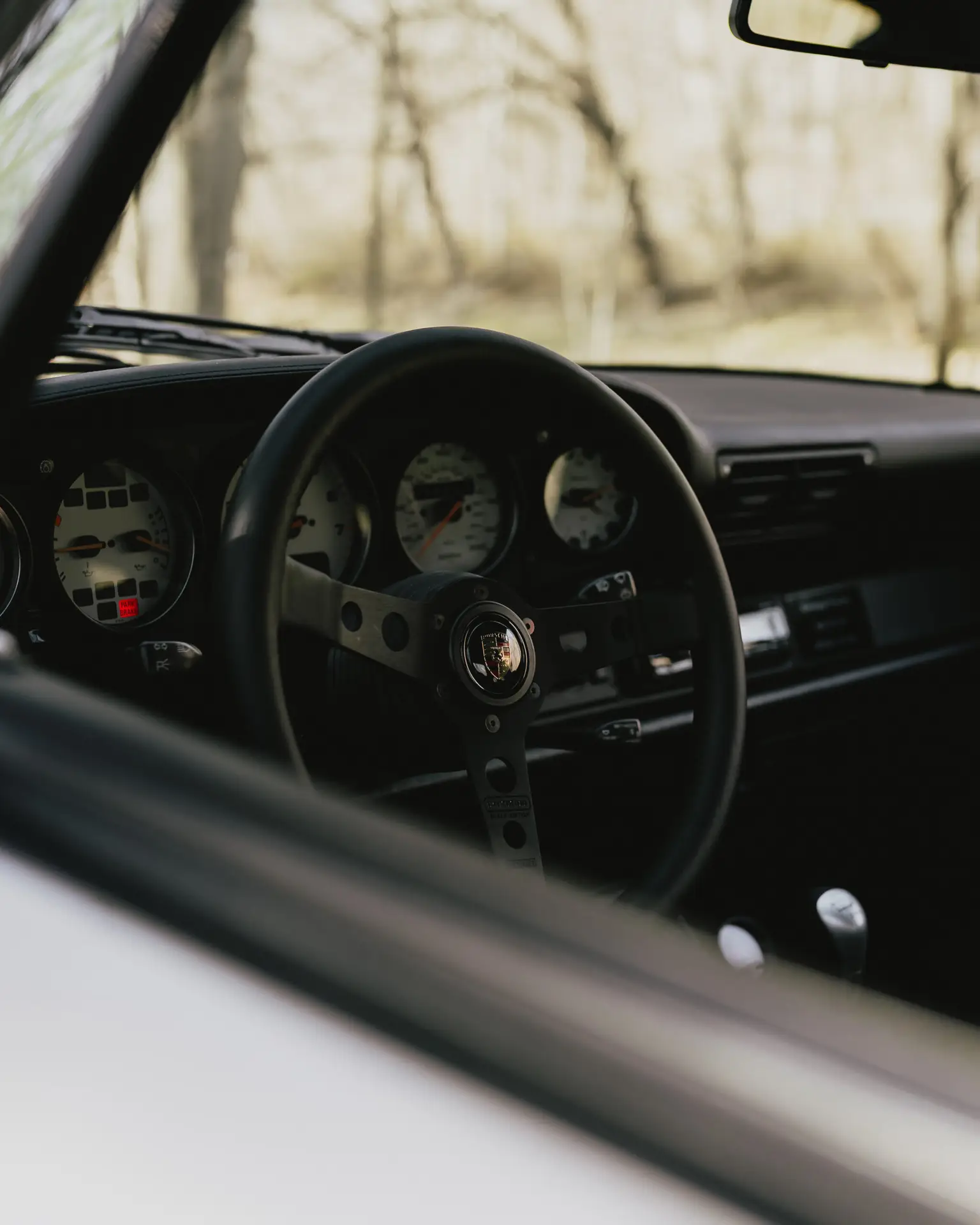
I watched the auction like a poker player watches the last card flip. The comments section was full with people who knew what Mark had made. People wanted to know where it came from, what various components were, and how much it had changed. Each answer reaffirmed what I already thought: this was the real deal, crafted by someone who cared more about doing it correctly than doing it quickly. The hammer fell on January 31st, and the automobile was purchased by someone else. I wasn’t ready and it was painful.
After a year or two later, the car went back on sale through private dealer. This time I was ready. I called the dealer, got the car checked out (PPI), and sent them my money. The car was finally mine.
When I turned the key and heard that flat-six bark to life behind me, it felt like I was eight years old again. I mean, I really felt the same excitement I felt as a kid when I saw that poster on my brother’s bedroom wall. There is nothing else in the car world that sounds like an air cooled turbo Porsche at idle. It sounds like it’s alive and can’t wait, like it’s churning, ticking, and breathing. When the turbos spin, a whoosh starts deep inside the car, and then the world speeds up so quickly that it pins you to the seat and makes your eyesight narrow. You can’t stop doing it. It’s frightening. It’s exactly what I’ve wanted for thirty years.
When I drove the GT2 into the back roads, I understood why they called it the Widowmaker. The back is shifting. Your palms, the seat, and the balls of your feet on the pedals can feel everything that happens, like every input, every weight transfer, and every change in grip level. You can’t control stability. You can’t control traction. There is no computer that can tell if your plans are good or bad and how the car will act. Physics lets you, the machine, and the road talk to each other. The automobile gives you points for driving smoothly and takes points away for driving aggressively. It says to think before you drive with your right foot. But when you get it right—when you thread a sequence of turns with the turbos singing, the chassis balanced, and every input precisely calibrated—there’s no other experience in the car world that compares.
I think about the youngster who was eight years old and taped photographs from magazines to the wall of his room. I think about the teenager who could remember how many horsepower a car had and how fast a quarter-mile run was. I think of the grown-up who assumed the Widowmaker will always be a poster car. And I think about Mark Kinninger, who lived in San Diego and spent his whole life discovering all the mysteries these cars had. He used all that information to develop something that helps individuals like me experience the dream without having to pay a lot of money.
The GT2 Klone is not a real GT2. Mark will tell you that. I will say that to you. The K in Klone stands for something. But here’s the thing: when I’m driving, with the turbos whirling, the back end dancing, and the flat-six screaming its air-cooled aria at seven thousand RPM, the line between tribute and original fades away into something that doesn’t matter anymore. The experience is what important. What counts is that I’m driving it—actually driving it—on canyon roads, back highways, and the occasional track day, putting miles on it without a single thinking about how much it will lose value or how much a stone chip will cost me.
The Widowmaker tormented me for twenty-five years. I finally have my own keys to the ghost.